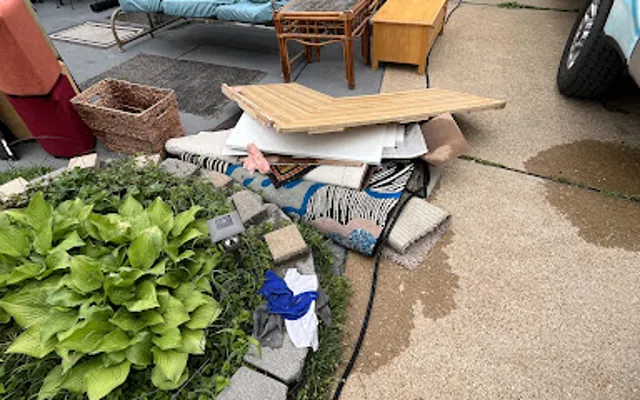
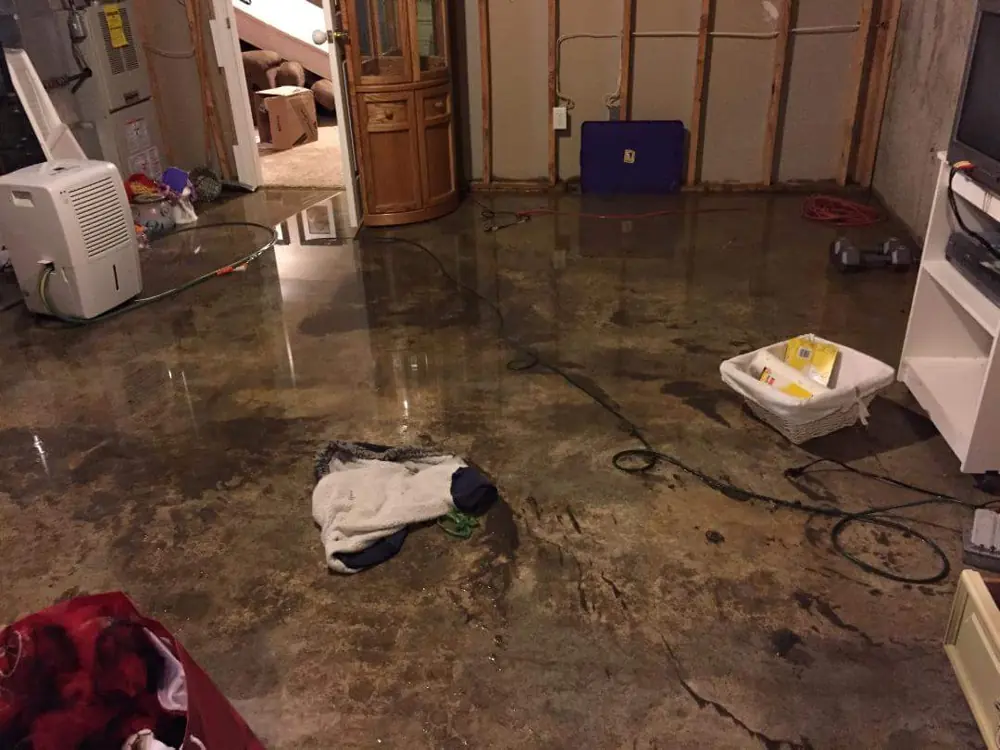
A municipal water main failure or a break in the private line running from the street to the house can send a large volume of water toward a Denton property in a short time, often undermining soil and pushing water against the foundation. A crew responds in about an hour to begin extraction and protect the structure.

The crew confirms water has been shut off at the meter or main before extraction begins.
Standing water is extracted from affected interior areas using truck-mounted and portable equipment.
Meters and thermal imaging trace how far water traveled into flooring, baseboards, and wall cavities.
Drying equipment runs to a verified standard, with every reading documented for the insurance and, where applicable, municipal claim.

While help is on the way, these first steps, done only where it is safe, limit the damage and protect the insurance claim.
Shut the supply off at the source, or close the home's main valve if the source is not obvious. Stopping the flow limits the damage more than anything else.
Switch off electricity to the affected area, but only if the breaker can be reached without standing in or touching the water.
Get a crew dispatched right away. The sooner extraction and drying begin, the more flooring, drywall, and belongings can be saved.
Take photos and a short video of the water and the affected rooms before anything is moved, so the insurance claim starts strong.
Cleanup after a water main break depends heavily on how much water reached the interior of the home before the line was shut off. A break that stays outside the structure but requires yard and foundation-area monitoring may run $500 to $1,500. A break that pushes water into the home can run $3,000 to $8,000 or more, depending on how many rooms are affected and whether flooring has to be removed. When a City of Denton main is at fault, a separate municipal claim process may apply alongside or instead of homeowner insurance, and documentation is prepared to support either path.
Crews reach Denton, Denton County, and the surrounding North Texas communities fast, from Downtown Denton, the Oak-Hickory Historic District, and Southridge to Corinth, Highland Village, Little Elm, and Lewisville. See the full list on the areas served across Denton page.
See all areas servedEvery loss is photographed, measured, and logged from the first visit, so the paperwork holds up with the insurance carrier.
Technicians follow recognized IICRC drying standards and prove it with daily moisture readings on Denton homes, not guesswork.
Emergency dispatch any hour of the day or night, with a real crew on the way across North Texas, not a callback in the morning.
A real crew dispatched any hour, not a callback in the morning.
Trained technicians following recognized IICRC drying standards.
Truck-mounted, portable, and submersible for any size loss.
The loss is documented and billed to the carrier directly.
It depends on where the break occurred. A break in the municipal main is generally a City of Denton matter, while a break in the private service line from the meter to the house is the homeowner's responsibility. Documentation supports either claim path.
Dispatch runs 24/7 with a typical arrival of about an hour to begin extraction and protect the structure.
Prolonged pooling against a slab foundation can saturate the soil and affect the ground around the house, which is why moisture is checked at baseboards and foundation lines even when water does not visibly enter the home.
Interior water damage from a private line break is typically covered. Damage tied to a municipal main failure may fall under a separate city claims process, and documentation is prepared to support whichever path applies.
A contained event without interior flooding often just needs monitoring. When water reaches the interior, drying typically takes two to five days depending on how many rooms and materials were affected.
Denton crews are on call 24 hours a day, local and fast, and can be on the way within the hour.
Call (940) 412-8500