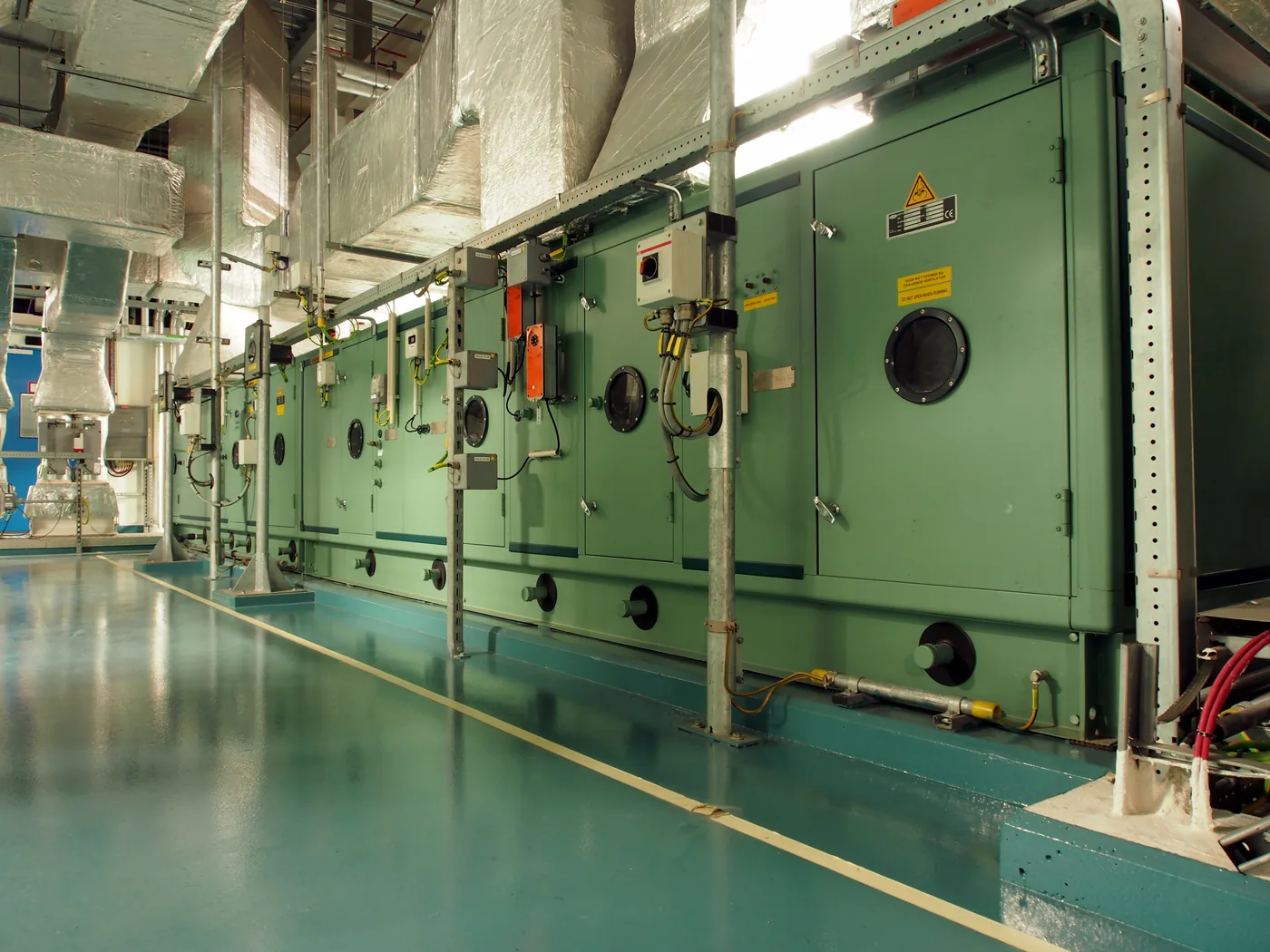
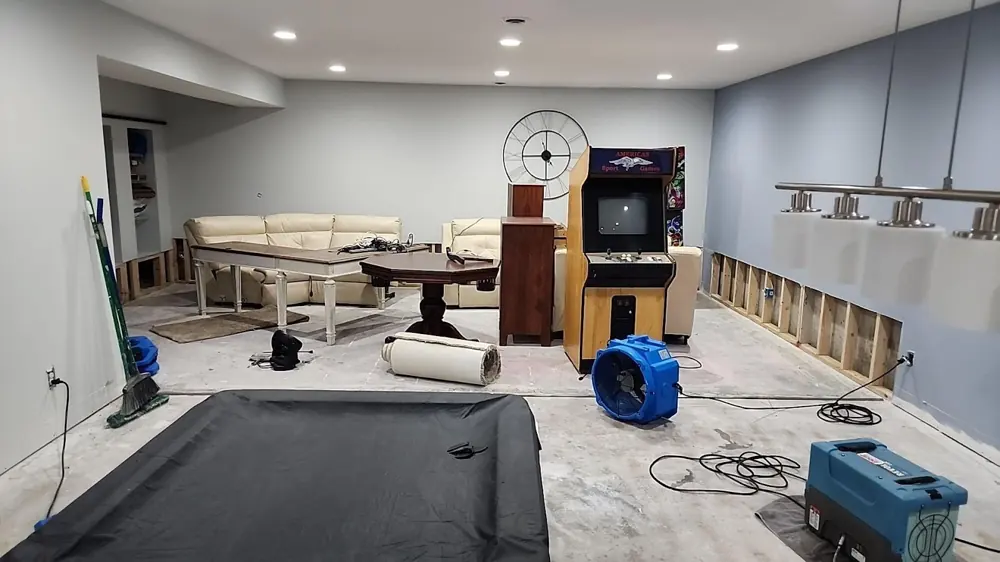
With cooling season in North Texas often running from April through October, a clogged AC condensate line or a failed drain pan can send water into an attic, closet, or straight through a ceiling before anyone notices. A crew reaches Denton homes in about an hour to extract and dry before the damage spreads further.

The technician confirms the HVAC condensate issue is resolved or contained before water damage cleanup begins.
Saturated attic insulation and any standing water in a drain pan or closet are extracted and removed as needed.
Meters check ceiling drywall, framing, and adjoining closet walls to map exactly how far the water traveled.
Drying equipment is staged in the attic and affected room until moisture readings confirm the structure is dry, with damaged drywall flagged for repair.

While help is on the way, these first steps, done only where it is safe, limit the damage and protect the insurance claim.
Shut the supply off at the source, or close the home's main valve if the source is not obvious. Stopping the flow limits the damage more than anything else.
Switch off electricity to the affected area, but only if the breaker can be reached without standing in or touching the water.
Get a crew dispatched right away. The sooner extraction and drying begin, the more flooring, drywall, and belongings can be saved.
Take photos and a short video of the water and the affected rooms before anything is moved, so the insurance claim starts strong.
HVAC condensation damage caught early, before a ceiling stain forms, often runs $200 to $600 for extraction and drying alone. Once a ceiling has visibly stained or sagged, cleanup and drywall repair commonly run $800 to $2,500, and a longer-running leak that saturates a larger section of attic insulation and framing can push higher. Homeowner policies often cover the resulting water damage from a sudden condensate line clog, though ongoing maintenance neglect can affect coverage, so documentation of the timeline matters.
Crews reach Denton, Denton County, and the surrounding North Texas communities fast, from Downtown Denton, the Oak-Hickory Historic District, and Southridge to Corinth, Highland Village, Little Elm, and Lewisville. See the full list on the areas served across Denton page.
See all areas servedEvery loss is photographed, measured, and logged from the first visit, so the paperwork holds up with the insurance carrier.
Technicians follow recognized IICRC drying standards and prove it with daily moisture readings on Denton homes, not guesswork.
Emergency dispatch any hour of the day or night, with a real crew on the way across North Texas, not a callback in the morning.
A real crew dispatched any hour, not a callback in the morning.
Trained technicians following recognized IICRC drying standards.
Truck-mounted, portable, and submersible for any size loss.
The loss is documented and billed to the carrier directly.
The condensate line that drains moisture from the air conditioning system can clog with algae and debris over time. Once it clogs, water backs up and often overflows into the attic or through a ceiling instead of draining outside as designed.
Routine condensate line flushing by an HVAC technician reduces clog risk, though once damage occurs, it still needs extraction and drying rather than just a line clear.
Sudden damage from a clogged line is often covered, though damage tied to long-term neglect of HVAC maintenance can be treated differently by some policies, so documenting the timeline matters.
As soon as it is noticed. A stain usually means water has already been sitting in the insulation and drywall for some time, and mold risk increases the longer it goes unaddressed.
Cleanup handles the water damage. Clearing the condensate line or servicing the drain pan is HVAC work, and the homeowner is typically referred to a qualified HVAC technician for that repair.
Denton crews are on call 24 hours a day, local and fast, and can be on the way within the hour.
Call (940) 412-8500