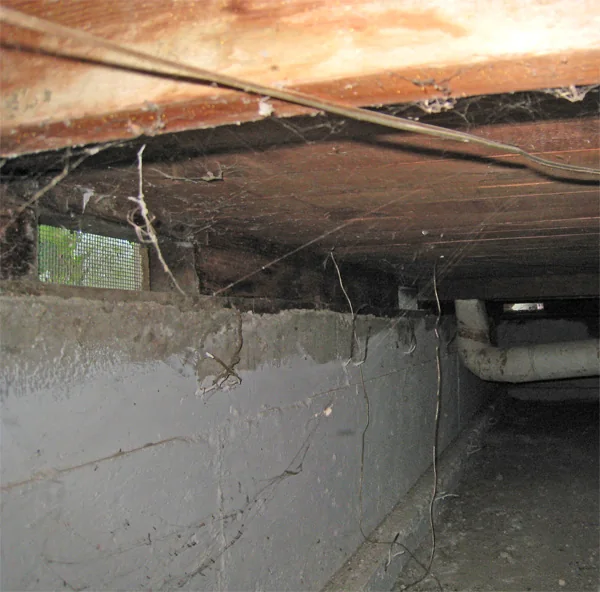
Most newer Denton homes sit on a solid slab, but many of the older pier-and-beam houses near downtown and the university areas have a crawlspace underneath that can trap water and moisture for weeks if it is not pumped out and dried.

A crew is typically on site in about an hour to assess the crawlspace access point and the extent of standing water.
Submersible pumps clear bulk standing water from the crawlspace, working around piers and utility lines to reach every low pocket.
Floor joists, subfloor, and any insulation in the crawlspace are checked for saturation and rot, with damaged material flagged or removed.
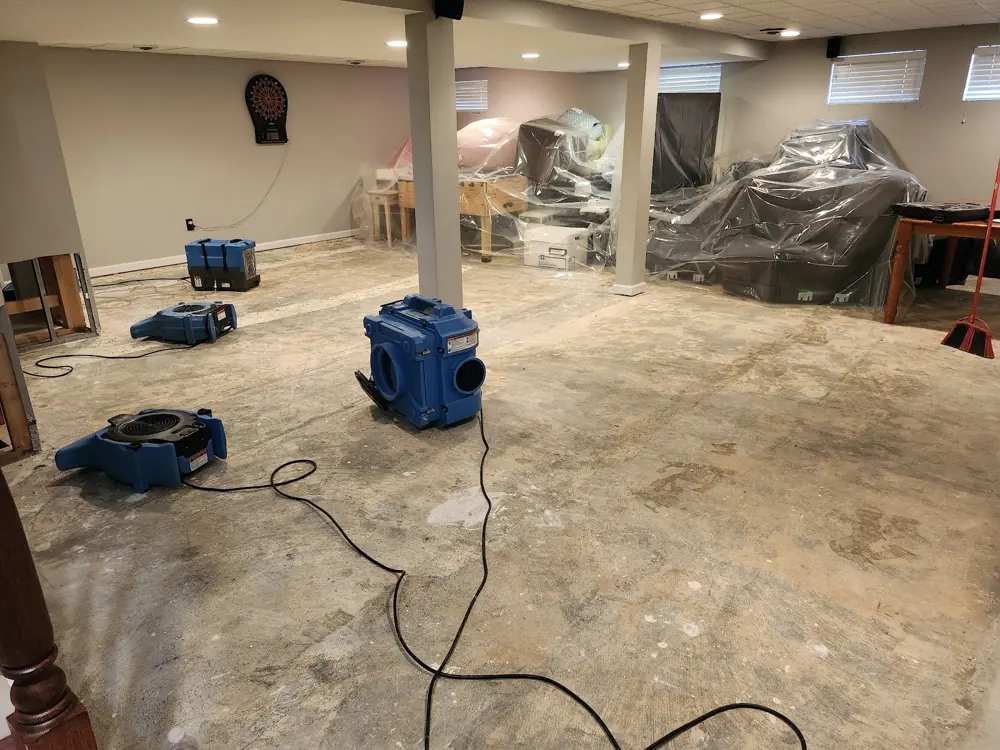
Industrial dehumidifiers and air movers dry the space to a verified moisture target, with follow-up checks to confirm the joists and subfloor stayed sound.

While help is on the way, these first steps, done only where it is safe, limit the damage and protect the insurance claim.
Shut the supply off at the source, or close the home's main valve if the source is not obvious. Stopping the flow limits the damage more than anything else.
Switch off electricity to the affected area, but only if the breaker can be reached without standing in or touching the water.
Get a crew dispatched right away. The sooner extraction and drying begin, the more flooring, drywall, and belongings can be saved.
Take photos and a short video of the water and the affected rooms before anything is moved, so the insurance claim starts strong.
Crawlspace water removal in Denton typically runs from about $600 to $3,000 depending on how much standing water is present, how accessible the crawlspace is, and whether any joist or subfloor damage needs to be flagged for repair. A one-time storm event on the lower end is far less costly than a chronic drainage problem that has allowed repeated flooding and wood rot to develop. Sudden water intrusion from a storm or pipe failure is commonly covered by homeowners insurance, and the work is documented with photos and moisture readings for the claim.
Crews reach Denton, Denton County, and the surrounding North Texas communities fast, from Downtown Denton, the Oak-Hickory Historic District, and Southridge to Corinth, Highland Village, Little Elm, and Lewisville. See the full list on the areas served across Denton page.
See all areas servedEvery loss is photographed, measured, and logged from the first visit, so the paperwork holds up with the insurance carrier.
Technicians follow recognized IICRC drying standards and prove it with daily moisture readings on Denton homes, not guesswork.
Emergency dispatch any hour of the day or night, with a real crew on the way across North Texas, not a callback in the morning.
A real crew dispatched any hour, not a callback in the morning.
Trained technicians following recognized IICRC drying standards.
Truck-mounted, portable, and submersible for any size loss.
The loss is documented and billed to the carrier directly.
Most newer Denton homes are built on a solid slab with no crawlspace. Many older pier-and-beam homes, especially near downtown and the university neighborhoods, do have a crawlspace beneath the living area.
A musty odor inside the home, higher humidity on the ground floor, or visible standing water through the crawlspace access panel are common signs worth checking after heavy rain.
Yes, over time. Prolonged moisture against floor joists and subfloor can lead to wood rot and weakened framing, which is why standing water is pumped out and the space is dried rather than left to evaporate on its own.
Sudden water intrusion from a storm or a plumbing failure is commonly covered by homeowners insurance. Chronic drainage issues that were known and unaddressed for a long time may be treated differently.
It depends on the amount of standing water and ventilation, but most crawlspaces reach a verified dry target within about three to seven days once pumping and dehumidification begin.
Denton crews are on call 24 hours a day, local and fast, and can be on the way within the hour.
Call (940) 412-8500