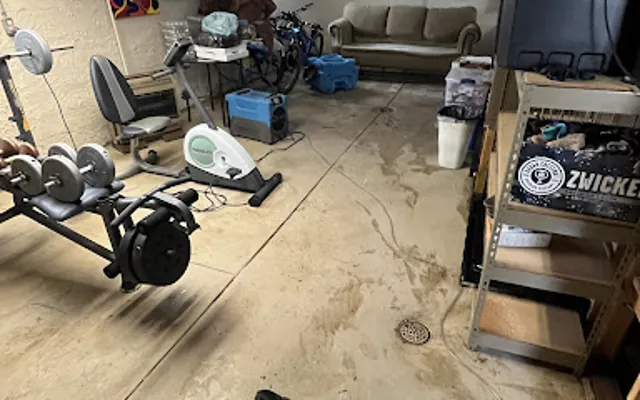
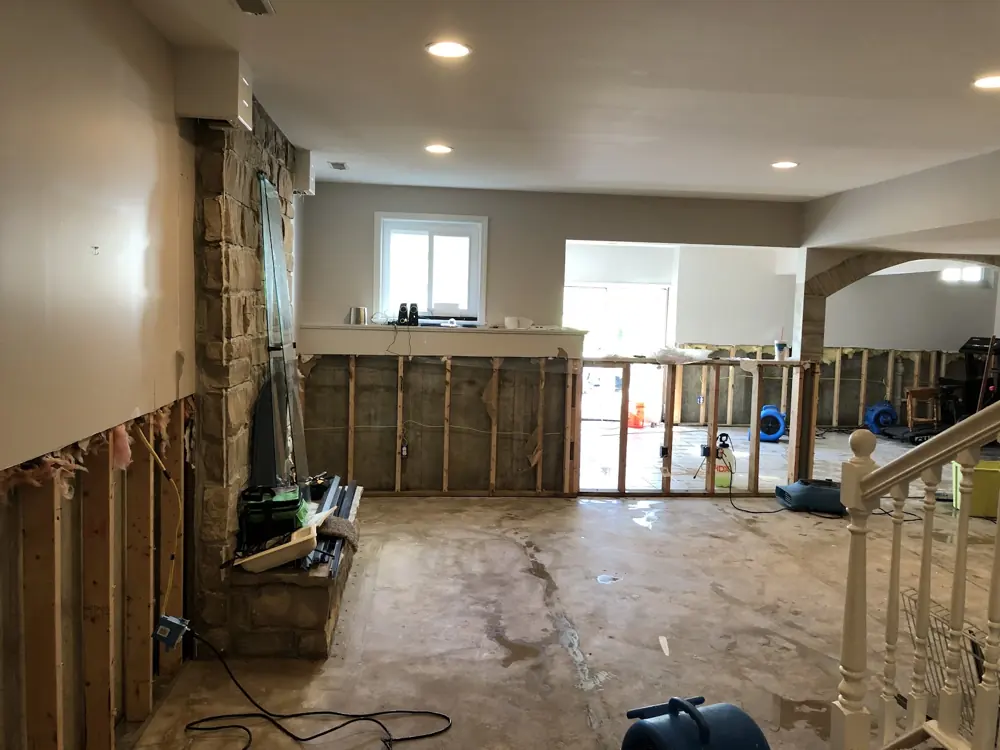
Nearly every home in Denton sits on a slab-on-grade foundation, which means a pinhole leak in a water line running under the concrete can push moisture up through flooring for weeks before it is noticed. A crew maps the affected area and starts drying within about an hour of the call.

Thermal imaging and meters trace how far water has spread under and around the slab before any flooring is disturbed.
The affected line is identified and the homeowner is connected with a qualified plumber to locate and repair the actual slab leak.
Flooring and baseboards affected by long-term moisture are extracted or removed as needed to expose the wet slab for drying.
Air movers and dehumidifiers dry the slab and surrounding materials to a verified moisture standard before flooring is replaced.

While help is on the way, these first steps, done only where it is safe, limit the damage and protect the insurance claim.
Shut the supply off at the source, or close the home's main valve if the source is not obvious. Stopping the flow limits the damage more than anything else.
Switch off electricity to the affected area, but only if the breaker can be reached without standing in or touching the water.
Get a crew dispatched right away. The sooner extraction and drying begin, the more flooring, drywall, and belongings can be saved.
Take photos and a short video of the water and the affected rooms before anything is moved, so the insurance claim starts strong.
Slab leak water damage cleanup runs a wide range depending on how long the leak went undetected. A leak caught early, before flooring buckles, often runs $800 to $2,500 for moisture mapping, extraction, and drying. A leak that has been active for weeks or months and damaged flooring across multiple rooms can run $5,000 to $12,000 or more once flooring removal and structural drying are included. The plumbing repair itself, cutting into the slab to fix the line, is billed separately by a qualified plumber. Many homeowner policies cover the resulting water damage even when the plumbing repair is excluded.
Crews reach Denton, Denton County, and the surrounding North Texas communities fast, from Downtown Denton, the Oak-Hickory Historic District, and Southridge to Corinth, Highland Village, Little Elm, and Lewisville. See the full list on the areas served across Denton page.
See all areas servedEvery loss is photographed, measured, and logged from the first visit, so the paperwork holds up with the insurance carrier.
Technicians follow recognized IICRC drying standards and prove it with daily moisture readings on Denton homes, not guesswork.
Emergency dispatch any hour of the day or night, with a real crew on the way across North Texas, not a callback in the morning.
A real crew dispatched any hour, not a callback in the morning.
Trained technicians following recognized IICRC drying standards.
Truck-mounted, portable, and submersible for any size loss.
The loss is documented and billed to the carrier directly.
Common signs include a warm or damp spot on the floor, a noticeable rise in the water bill, the sound of running water when fixtures are off, or flooring that buckles or discolors near a wall for no clear reason.
Denton's expansive clay soil shifts with wet and dry cycles, and that movement puts ongoing stress on water lines running beneath slab foundations, which are standard across nearly all Denton homes.
Many policies cover the resulting water damage to flooring and structure even when they exclude the cost of the plumbing repair itself, but coverage details vary by policy.
Cleanup addresses the water damage; locating and repairing the leaking line under the slab is plumbing work, and the homeowner is referred to a qualified plumber for that part.
It depends on how long the leak was active. Flooring caught early with limited moisture exposure sometimes dries and can be reused, while flooring exposed for weeks typically needs replacement.
Denton crews are on call 24 hours a day, local and fast, and can be on the way within the hour.
Call (940) 412-8500