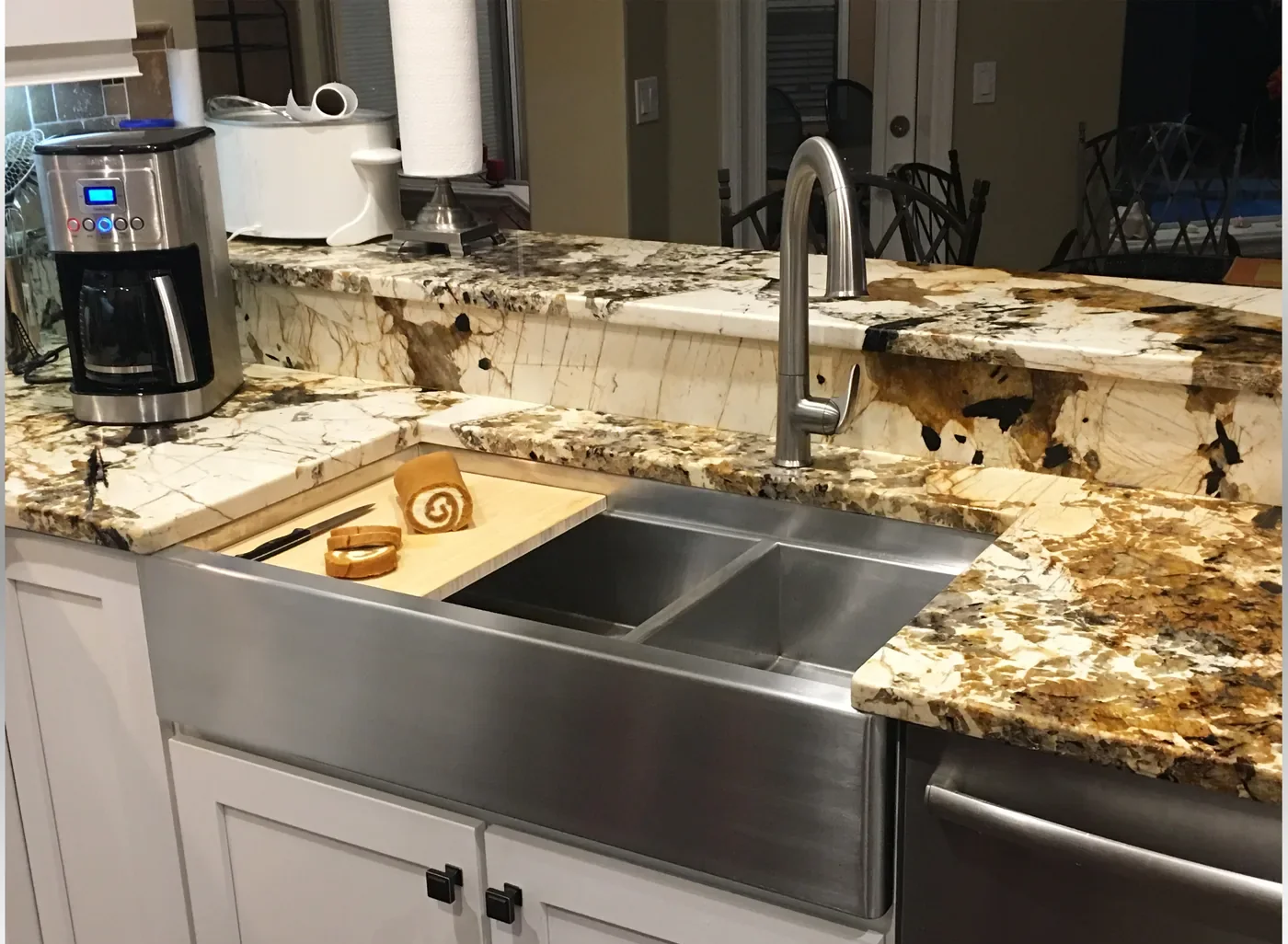
A clogged drain line or a supply line that lets go under the kitchen sink can send water across the floor and under the cabinet toe-kick before anyone notices, especially overnight. Crews reach Denton kitchens with extraction and drying equipment in about an hour to stop it from spreading into the subfloor and adjoining rooms.

The technician confirms the water supply is off and traces how far the overflow traveled before extraction begins.
Standing water is extracted from the cabinet base, toe-kick, and surrounding flooring, and cabinet contents are pulled to check for hidden moisture.
Meters check the subfloor, cabinet sides, and adjoining wall cavity so no wet material is missed and sealed in behind cabinetry.
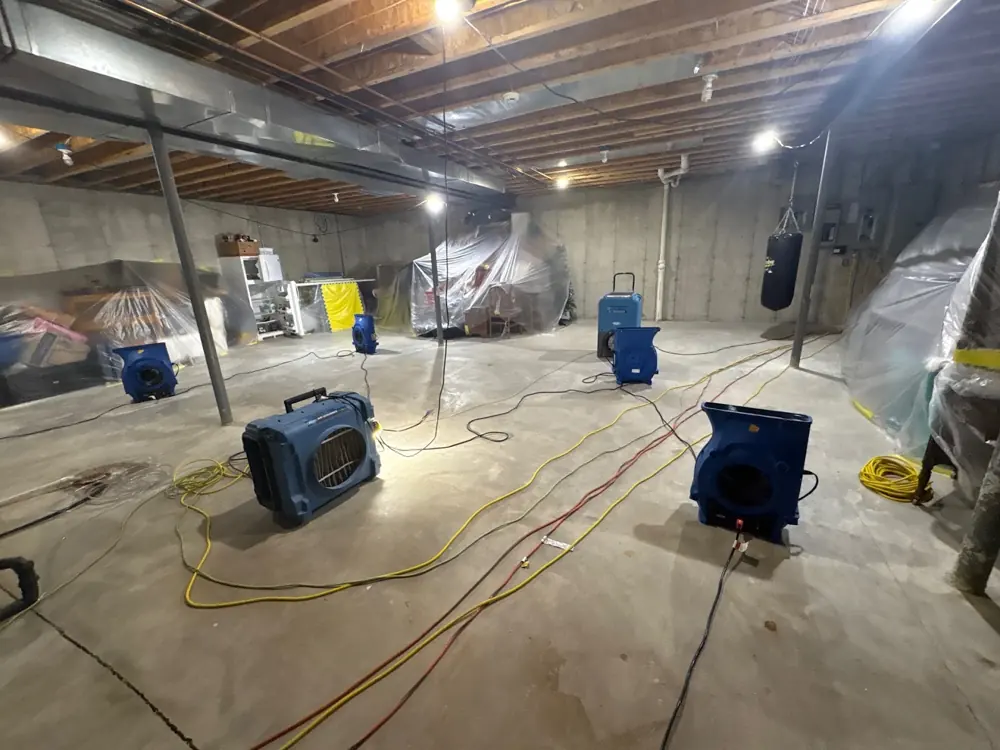
Compact air movers and dehumidifiers are placed under and around the cabinet base to dry the space without a full cabinet teardown when possible.

While help is on the way, these first steps, done only where it is safe, limit the damage and protect the insurance claim.
Shut the supply off at the source, or close the home's main valve if the source is not obvious. Stopping the flow limits the damage more than anything else.
Switch off electricity to the affected area, but only if the breaker can be reached without standing in or touching the water.
Get a crew dispatched right away. The sooner extraction and drying begin, the more flooring, drywall, and belongings can be saved.
Take photos and a short video of the water and the affected rooms before anything is moved, so the insurance claim starts strong.
A contained kitchen sink overflow caught within a few hours often runs $300 to $900 for extraction and drying alone. If water sat long enough to swell the cabinet base, delaminate particleboard subflooring, or reach an adjoining room, costs can climb to $1,500 to $3,500 once cabinet and flooring repair are added. Category of the water matters too. Clean supply-line water is far less costly to remediate than water that backed up through a clogged drain. Sudden overflow damage is commonly covered by homeowner policies, and moisture readings are documented for the claim.
Crews reach Denton, Denton County, and the surrounding North Texas communities fast, from Downtown Denton, the Oak-Hickory Historic District, and Southridge to Corinth, Highland Village, Little Elm, and Lewisville. See the full list on the areas served across Denton page.
See all areas servedEvery loss is photographed, measured, and logged from the first visit, so the paperwork holds up with the insurance carrier.
Technicians follow recognized IICRC drying standards and prove it with daily moisture readings on Denton homes, not guesswork.
Emergency dispatch any hour of the day or night, with a real crew on the way across North Texas, not a callback in the morning.
A real crew dispatched any hour, not a callback in the morning.
Trained technicians following recognized IICRC drying standards.
Truck-mounted, portable, and submersible for any size loss.
The loss is documented and billed to the carrier directly.
If the cabinet base feels soft, the toe-kick is swollen, or flooring near the sink feels spongy, water has likely reached the subfloor. A moisture meter reading during the visit confirms exactly how far it traveled.
Often, yes, if extraction and drying start within the first day. Particleboard cabinet bases that have already swollen or delaminated typically need replacement, but solid wood cabinetry frequently dries out without issue.
Sudden overflow from a clog or supply-line failure is typically covered. Damage from a slow leak that went unnoticed for weeks is less likely to be covered, so fast reporting helps.
A contained kitchen overflow usually dries in two to three days with equipment in place, verified with follow-up moisture readings before equipment is pulled.
Dispatch is available 24/7. Once discovered, calling right away and shutting off the water supply if possible limits how far the water spreads before a crew arrives.
Denton crews are on call 24 hours a day, local and fast, and can be on the way within the hour.
Call (940) 412-8500