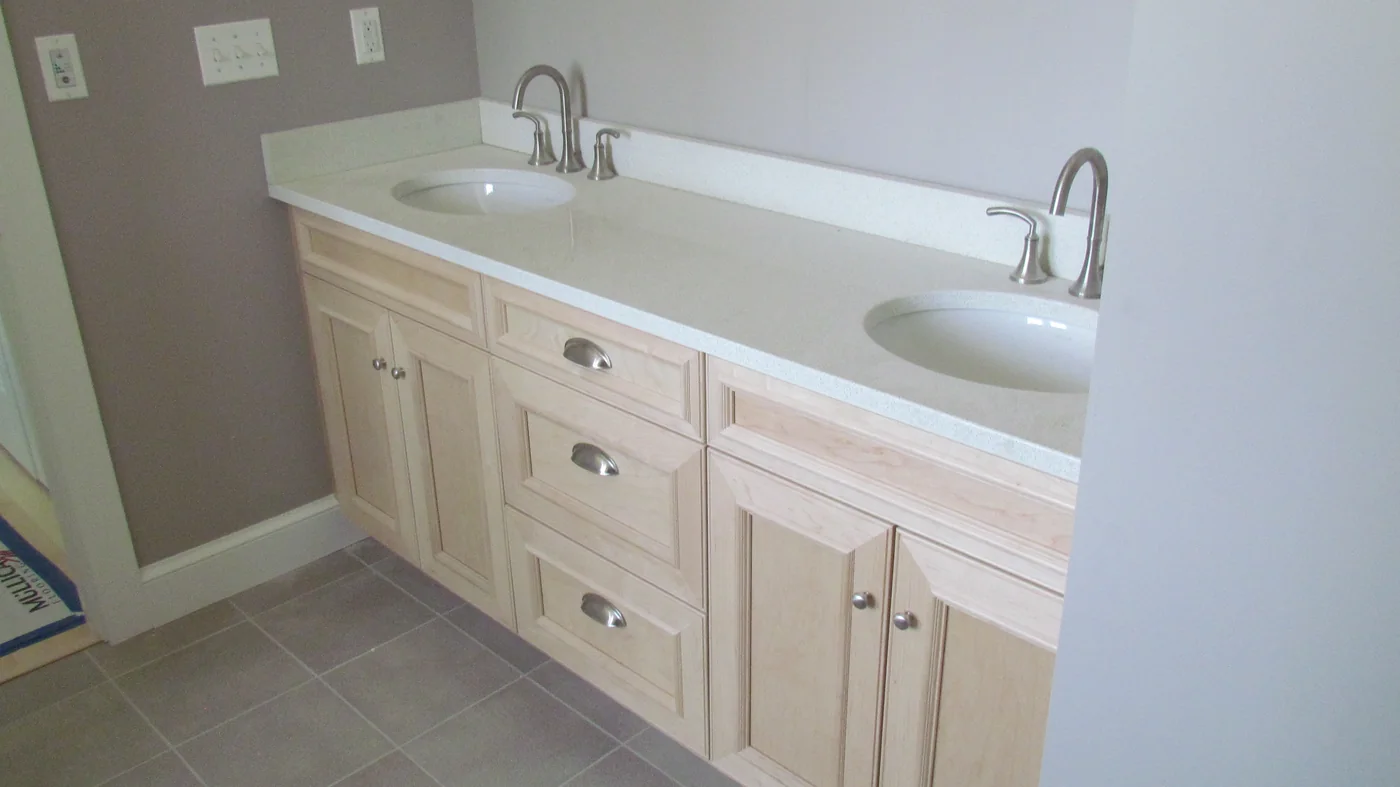
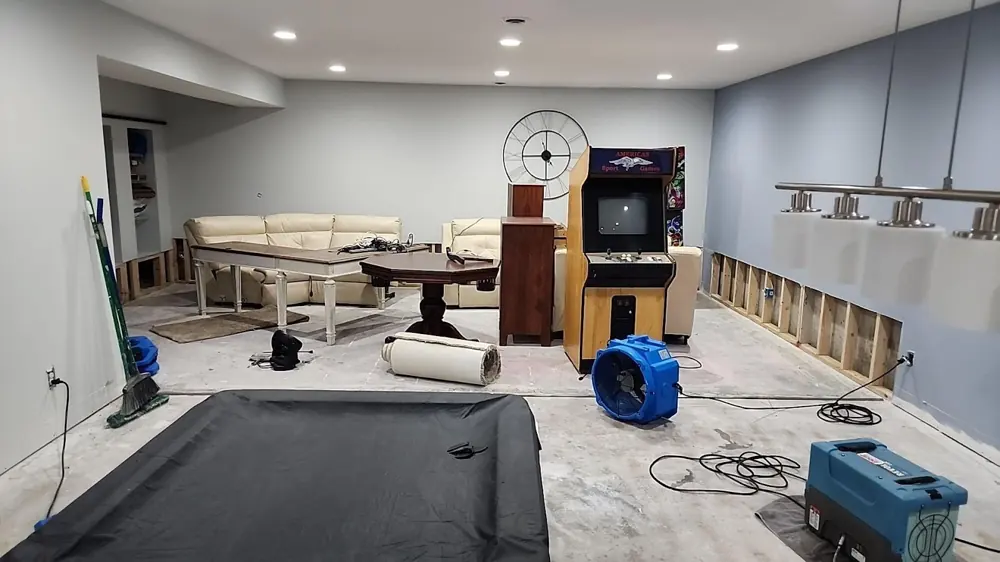
A stopped-up bathroom sink left running, or a P-trap fitting that finally fails, can put water across the vanity, tile, and into the hallway before anyone hears it. A Denton crew can be on site in about an hour with extraction and drying equipment to keep it from reaching adjoining rooms.

The technician confirms the supply line or shutoff valve is closed and traces how far water traveled beyond the bathroom door.
Standing water is extracted from tile, vanity base, and any adjoining hallway flooring before it can wick further.
Meters check the vanity cabinet, subfloor, and the base of the adjoining wall to confirm the true extent of the intrusion.
Air movers and a dehumidifier are staged in the bathroom and hallway until moisture readings return to a dry standard.

While help is on the way, these first steps, done only where it is safe, limit the damage and protect the insurance claim.
Shut the supply off at the source, or close the home's main valve if the source is not obvious. Stopping the flow limits the damage more than anything else.
Switch off electricity to the affected area, but only if the breaker can be reached without standing in or touching the water.
Get a crew dispatched right away. The sooner extraction and drying begin, the more flooring, drywall, and belongings can be saved.
Take photos and a short video of the water and the affected rooms before anything is moved, so the insurance claim starts strong.
A bathroom sink overflow caught quickly and limited to tile and vanity flooring typically runs $250 to $800 for extraction and drying. If water reached hallway carpet, wood flooring, or the wall behind the vanity, costs commonly run $1,000 to $2,500 once repairs are included. Homes with original plumbing and older vanity cabinetry sometimes see higher material losses since older particleboard and trim do not hold up well to standing water. Sudden overflow events are typically covered by homeowner insurance, and moisture documentation supports the claim.
Crews reach Denton, Denton County, and the surrounding North Texas communities fast, from Downtown Denton, the Oak-Hickory Historic District, and Southridge to Corinth, Highland Village, Little Elm, and Lewisville. See the full list on the areas served across Denton page.
See all areas servedEvery loss is photographed, measured, and logged from the first visit, so the paperwork holds up with the insurance carrier.
Technicians follow recognized IICRC drying standards and prove it with daily moisture readings on Denton homes, not guesswork.
Emergency dispatch any hour of the day or night, with a real crew on the way across North Texas, not a callback in the morning.
A real crew dispatched any hour, not a callback in the morning.
Trained technicians following recognized IICRC drying standards.
Truck-mounted, portable, and submersible for any size loss.
The loss is documented and billed to the carrier directly.
Often, yes, if extraction starts within a few hours. Hardwood and laminate that sat in standing water overnight have a lower chance, but tile and most subfloor typically dry out fine with prompt extraction.
Dispatch runs 24/7 with a typical arrival of about an hour anywhere in the Denton area.
It depends on how long water sat and what the cabinet base is made of. Particleboard bases that have already swollen usually need replacement, while solid wood often survives with drying alone.
Sudden overflow from a clog, running tap, or fitting failure is typically covered. Slow leaks that went unnoticed for an extended period are less likely to be covered.
Shut off the water supply valve under the sink if accessible, soak up what can be reached with towels, and call for dispatch so extraction and moisture mapping can start before the water travels further.
Denton crews are on call 24 hours a day, local and fast, and can be on the way within the hour.
Call (940) 412-8500