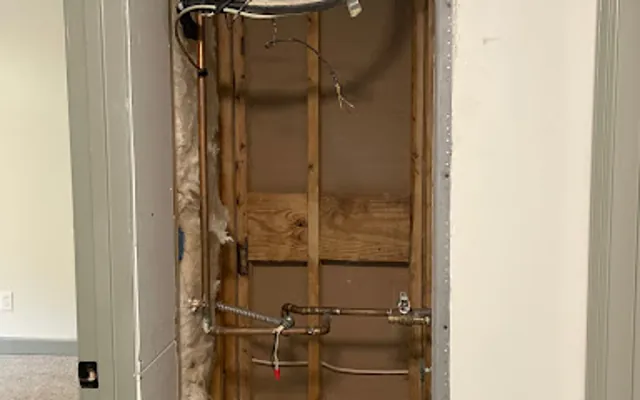
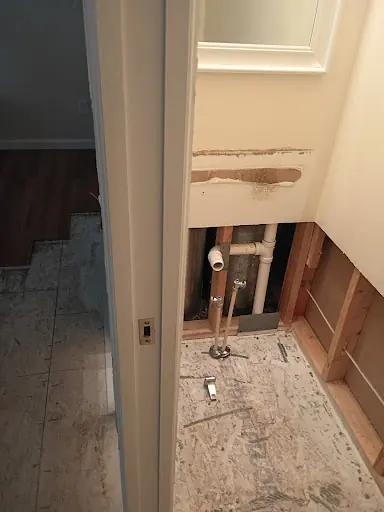
A burst pipe can put hundreds of gallons into a Denton home in a single day. Crews respond 24/7 to shut down the spread, extract the water, and start drying before drywall, flooring, and cabinetry take on more damage.

A crew is typically on site in about an hour to confirm the water supply is off and assess electrical safety before extraction begins.
Truck-mounted and portable units clear standing water from every affected room, working fastest through the lowest points first.
Drywall and insulation around the burst point are opened where needed, since water from an attic or wall break travels well beyond the visible stain.
Meters and thermal imaging trace the full spread, then dehumidifiers and air movers dry the structure to a verified target with readings logged for the claim.

While help is on the way, these first steps, done only where it is safe, limit the damage and protect the insurance claim.
Shut the supply off at the source, or close the home's main valve if the source is not obvious. Stopping the flow limits the damage more than anything else.
Switch off electricity to the affected area, but only if the breaker can be reached without standing in or touching the water.
Get a crew dispatched right away. The sooner extraction and drying begin, the more flooring, drywall, and belongings can be saved.
Take photos and a short video of the water and the affected rooms before anything is moved, so the insurance claim starts strong.
Burst pipe cleanup in Denton typically runs from about $1,500 to $8,000 depending on how many rooms and floors were affected and whether the break was in an attic, a wall, or a slab-level line, with multi-room freeze events from a hard Arctic outbreak often landing at the higher end. Homeowners insurance generally covers sudden pipe bursts, including freeze-related failures, and the crew documents moisture readings, photos, and the extent of the spread for direct submission to the carrier, separate from the plumbing repair itself, which needs a qualified plumber.
Crews reach Denton, Denton County, and the surrounding North Texas communities fast, from Downtown Denton, the Oak-Hickory Historic District, and Southridge to Corinth, Highland Village, Little Elm, and Lewisville. See the full list on the areas served across Denton page.
See all areas servedEvery loss is photographed, measured, and logged from the first visit, so the paperwork holds up with the insurance carrier.
Technicians follow recognized IICRC drying standards and prove it with daily moisture readings on Denton homes, not guesswork.
Emergency dispatch any hour of the day or night, with a real crew on the way across North Texas, not a callback in the morning.
A real crew dispatched any hour, not a callback in the morning.
Trained technicians following recognized IICRC drying standards.
Truck-mounted, portable, and submersible for any size loss.
The loss is documented and billed to the carrier directly.
Yes, periodically. North Texas sees occasional Arctic outbreaks that push temperatures well below normal for a few days, the February 2021 freeze being the most severe on record, and pipes not built for sustained deep cold can split during those events even though hard freezes are not the norm here.
No. Age, corrosion, and pressure spikes can cause a pipe to fail at any time of year, and the extraction and drying process is the same regardless of the cause.
It varies widely depending on how long the pipe ran before shutoff, but even a few hours can release hundreds of gallons, especially from a pressurized supply line.
Sudden pipe bursts, including freeze-related failures, are commonly covered by homeowners insurance. The cleanup is documented with photos and moisture logs for direct submission to the carrier.
Extraction and drying crews handle the water damage; the pipe repair itself is referred to a qualified plumber, since that is separate specialized trade work.
Denton crews are on call 24 hours a day, local and fast, and can be on the way within the hour.
Call (940) 412-8500