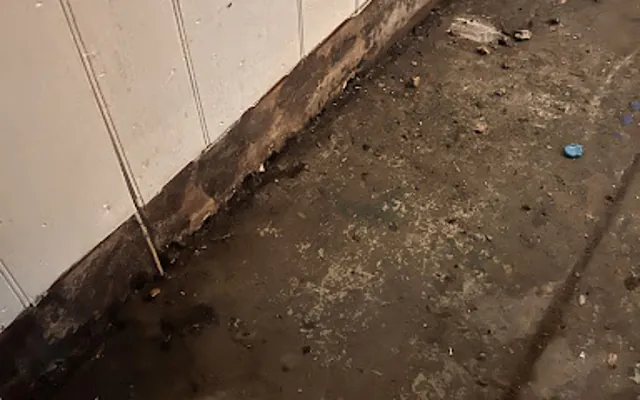
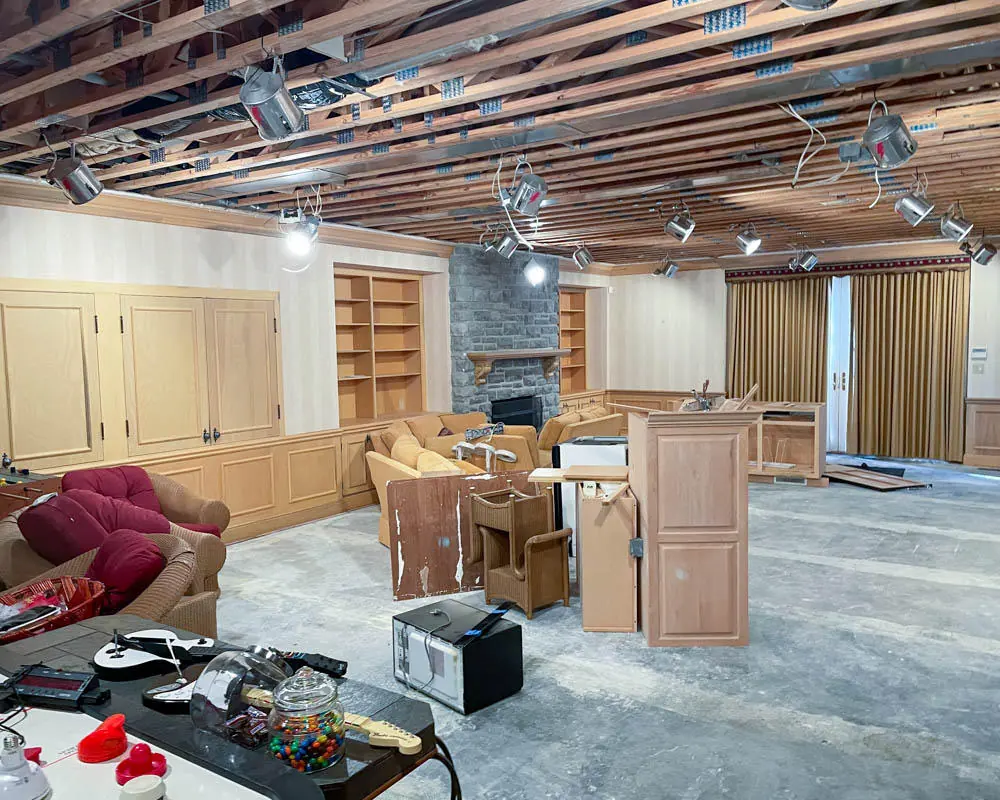
A sewage backup is a contamination event, not just a mess. Crews respond around the clock across Denton to extract category 3 water, sanitize affected materials, and get the space safe again.

A crew is typically on site in about an hour, and the affected area is contained immediately to keep contamination from spreading to clean parts of the home.
Submersible pumps and extraction units remove standing sewage water first, following biohazard safety protocols for the crew and the household.
Carpet, pad, and other porous materials that contacted category 3 water are removed and bagged for disposal rather than cleaned, since they cannot be safely sanitized.
Remaining hard surfaces are cleaned and sanitized, the space is dried to a verified moisture target, and everything removed is photographed and logged for the insurance claim.

While help is on the way, these first steps, done only where it is safe, limit the damage and protect the insurance claim.
Shut the supply off at the source, or close the home's main valve if the source is not obvious. Stopping the flow limits the damage more than anything else.
Switch off electricity to the affected area, but only if the breaker can be reached without standing in or touching the water.
Get a crew dispatched right away. The sooner extraction and drying begin, the more flooring, drywall, and belongings can be saved.
Take photos and a short video of the water and the affected rooms before anything is moved, so the insurance claim starts strong.
Sewage backup cleanup in Denton typically runs from about $1,500 to $7,000 depending on how many rooms were affected, how much carpet and drywall had to be removed, and whether the backup came from a single clogged line or a municipal surcharge affecting the whole house. Homeowners policies often cover sudden backups, though some require a separate sewer backup rider, so coverage is confirmed early and every removed item is documented with photos for the claim.
Crews reach Denton, Denton County, and the surrounding North Texas communities fast, from Downtown Denton, the Oak-Hickory Historic District, and Southridge to Corinth, Highland Village, Little Elm, and Lewisville. See the full list on the areas served across Denton page.
See all areas servedEvery loss is photographed, measured, and logged from the first visit, so the paperwork holds up with the insurance carrier.
Technicians follow recognized IICRC drying standards and prove it with daily moisture readings on Denton homes, not guesswork.
Emergency dispatch any hour of the day or night, with a real crew on the way across North Texas, not a callback in the morning.
A real crew dispatched any hour, not a callback in the morning.
Trained technicians following recognized IICRC drying standards.
Truck-mounted, portable, and submersible for any size loss.
The loss is documented and billed to the carrier directly.
Yes. It is classified as category 3, or black water, and can carry bacteria and other contaminants. It is handled with dedicated protective equipment and disposal procedures rather than treated like clean water.
Generally no. Carpet and pad that contact category 3 water usually cannot be sanitized safely and are removed and disposed of rather than cleaned and dried in place.
A clog anywhere in the home's own line, from grease, wipes, or roots near the cleanout, can push wastewater back up through the lowest fixture regardless of how new the house is.
Many homeowners policies cover sudden sewer backups, though some require a separate backup or overflow rider. Coverage is confirmed with the carrier early, and the cleanup is documented with photos either way.
As soon as possible. Category 3 water spreads contamination the longer it sits, so extraction and containment typically begin within about an hour of the call, 24 hours a day.
Denton crews are on call 24 hours a day, local and fast, and can be on the way within the hour.
Call (940) 412-8500