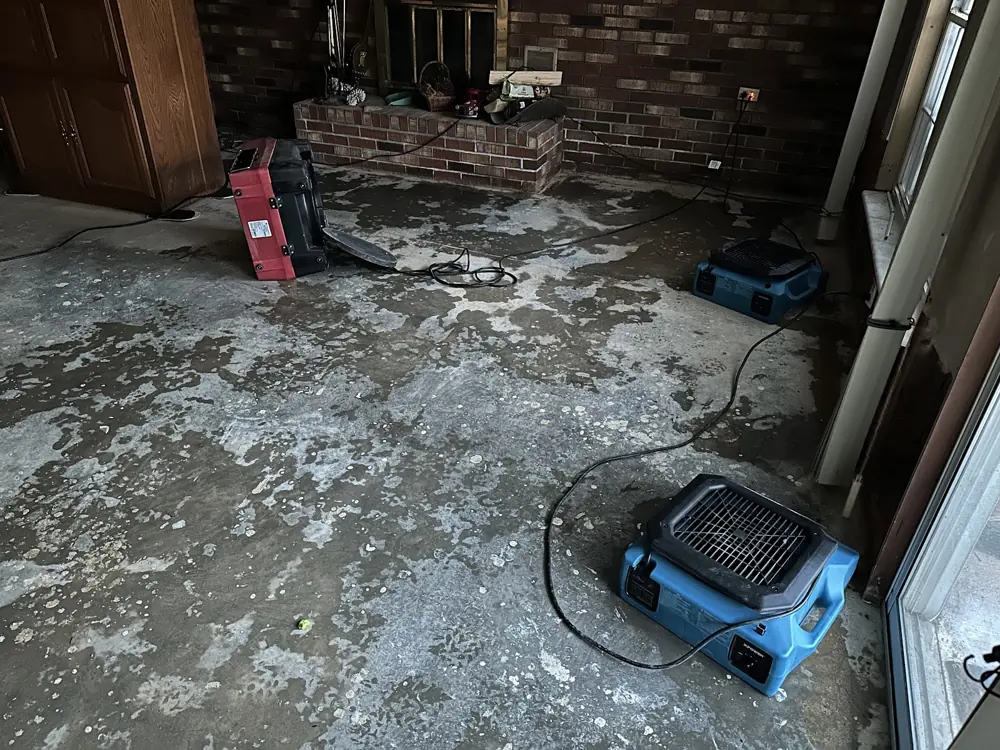
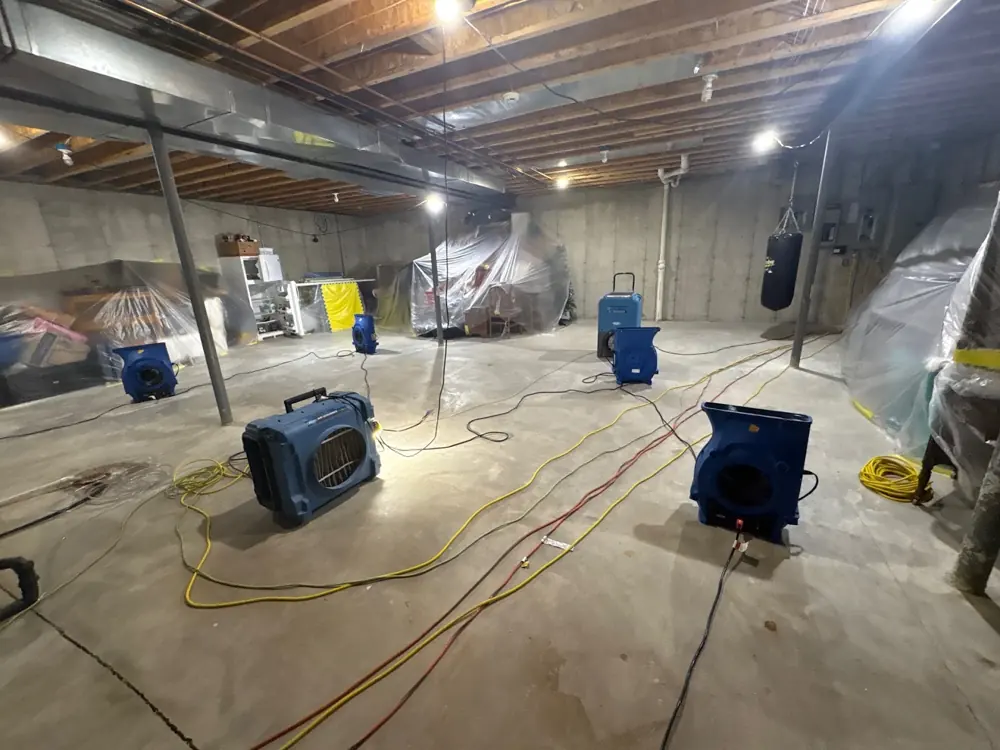
A Denton garage can take on water from a storm sheeting across the driveway, a water heater failure, or a slab leak running under the garage floor, and because garages often store cardboard, drywall stock, and other absorbent materials, water damage there can spread fast. A crew responds in about an hour to extract and dry the space.

The technician determines whether the water came from storm intrusion, a failed appliance, or a slab leak before cleanup begins.
Standing water is extracted from the garage floor, and any contents that absorbed water are identified and moved.
Meters check the base of drywall, the interior door threshold, and, where relevant, the slab itself for a hidden leak.
Drying equipment is staged to bring the garage to a verified dry standard, with documentation prepared for the insurance claim.

While help is on the way, these first steps, done only where it is safe, limit the damage and protect the insurance claim.
Shut the supply off at the source, or close the home's main valve if the source is not obvious. Stopping the flow limits the damage more than anything else.
Switch off electricity to the affected area, but only if the breaker can be reached without standing in or touching the water.
Get a crew dispatched right away. The sooner extraction and drying begin, the more flooring, drywall, and belongings can be saved.
Take photos and a short video of the water and the affected rooms before anything is moved, so the insurance claim starts strong.
Garage water damage cleanup depends heavily on the source and how much was stored on the floor. A storm-related intrusion contained to the floor and a few feet of drywall base often runs $300 to $900. A water heater failure or slab leak that saturates a larger area, or reaches an interior threshold, can run $1,000 to $3,000 once drywall and any structural drying are included. Storm intrusion and sudden appliance failures are typically covered by homeowner policies, and documentation is prepared to support the claim.
Crews reach Denton, Denton County, and the surrounding North Texas communities fast, from Downtown Denton, the Oak-Hickory Historic District, and Southridge to Corinth, Highland Village, Little Elm, and Lewisville. See the full list on the areas served across Denton page.
See all areas servedEvery loss is photographed, measured, and logged from the first visit, so the paperwork holds up with the insurance carrier.
Technicians follow recognized IICRC drying standards and prove it with daily moisture readings on Denton homes, not guesswork.
Emergency dispatch any hour of the day or night, with a real crew on the way across North Texas, not a callback in the morning.
A real crew dispatched any hour, not a callback in the morning.
Trained technicians following recognized IICRC drying standards.
Truck-mounted, portable, and submersible for any size loss.
The loss is documented and billed to the carrier directly.
Garages typically sit at grade with a door that is not fully sealed against water, making them one of the first entry points during heavy rain, especially when driveway drainage cannot keep up.
It depends on the material and how long they sat in water. Items on shelving usually fare better than boxes or furniture stored directly on the floor.
Sudden storm intrusion and appliance failures like a water heater are typically covered. Ongoing seepage from a grading issue may be treated differently, so it is worth reviewing the policy.
Yes. A leak in a line running under the garage slab can push water up through cracks or seams, similar to a slab leak elsewhere in the house, and moisture mapping is used to confirm the source.
A contained storm intrusion often dries within a day. A larger event involving a failed appliance or standing water under stored items can take two to three days to fully verify dry.
Denton crews are on call 24 hours a day, local and fast, and can be on the way within the hour.
Call (940) 412-8500